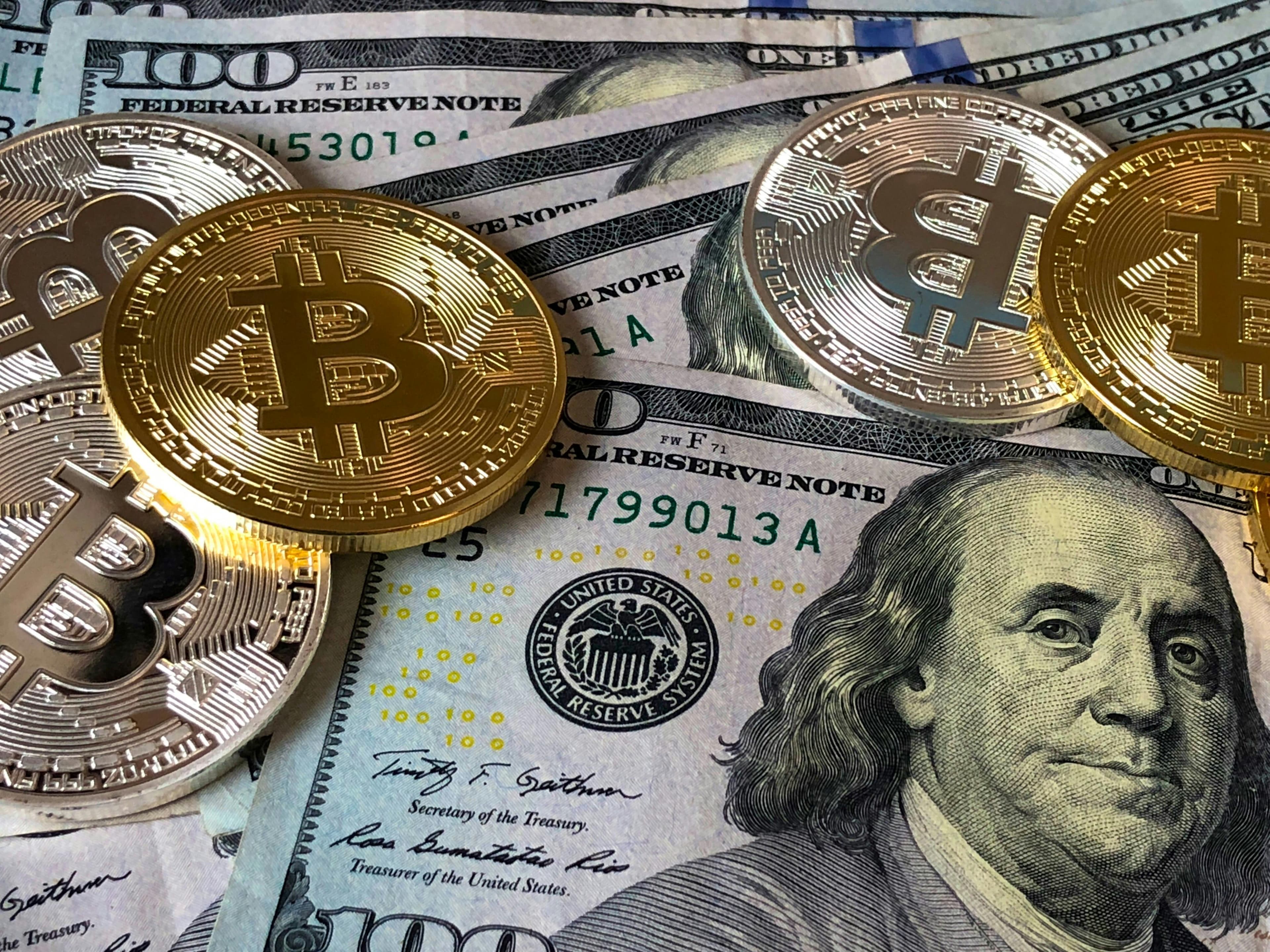
Is Now a Good Time to Buy Bitcoin? Market Analysis 2025
Bitcoin down 25% from highs: Is now the time to buy? Analyze halving cycles, institutional behavior, and sentiment indicators for informed Bitcoin investment decisions.
"Is now a good time to buy Bitcoin?" It's the question that has echoed through investment forums, social media, and financial news for over a decade. And it's particularly pressing in late 2025, with Bitcoin trading around $95,000—down 25% from its all-time high above $126,000 reached earlier this year, yet still up dramatically from where it was just a few years ago. Whether you're a crypto skeptic considering your first purchase, a longtime believer looking to add to your position, or somewhere in between, the timing question feels urgent.
But here's what veteran Bitcoin investors have learned: asking "Is now the right time?" often matters less than asking "What's my strategy, what's my timeline, and how much am I willing to allocate?" Bitcoin's volatility means there's never a "perfect" time to buy—prices can swing 20-30% in months, making any entry point feel wrong shortly after purchase. Yet those who've held Bitcoin for 3-4+ years have almost always been rewarded, regardless of their entry timing.
This guide will help you cut through the noise, understand current market conditions, evaluate the bull and bear cases, and most importantly, develop a rational framework for deciding whether Bitcoin deserves a place in your portfolio right now.
Bitcoin Market at a Glance (November 2025)
Current Price
~$95,600
-25% from $126K ATH
YTD Performance
+8% (2025)
After earlier highs
Market Sentiment
Extreme Fear (14)
Fear & Greed Index
Institutional Position
87% Held
Through correction
Post-Halving Phase
Prime Window
12-18 months post-halving
Price Target (2025)
$110-115K
Analyst consensus
Quick takeaway: Bitcoin is 25% below recent highs with "extreme fear" sentiment—historically favorable entry conditions. Post-halving window and institutional holding patterns support bullish case, but volatility remains high.
Is Now a Good Time to Buy Bitcoin?
Quick Answer: For long-term investors (3-4+ year horizon) using dollar-cost averaging, the current environment offers compelling entry conditions: Bitcoin is down 25% from recent highs, sentiment is extremely fearful (historically a contrarian buy signal), we're in the favorable post-halving window, and institutions are holding positions. However, Bitcoin remains highly volatile and should represent only 2-10% of your portfolio depending on risk tolerance.
The key insight that separates successful Bitcoin investors from unsuccessful ones: time in the market matters more than timing the market. Virtually every Bitcoin investor who held for 3-4+ years has made money, regardless of entry price. Conversely, those who tried to perfectly time entries and exits often underperformed or lost money through poor timing decisions driven by emotion.
Current conditions in late 2025 present what many analysts view as an attractive entry point:
- 25% correction from highs has removed froth and excessive optimism
- Extreme fear (14 on Fear & Greed Index) suggests maximum pessimism, historically marking near-term bottoms
- Post-halving timing puts us in the historically strongest 12-18 month window after supply reduction events
- Institutional confidence demonstrated by 87% position retention and Harvard's ETF tripling to $443M
- Wallet accumulation showing large holders (100+ BTC) increased holdings 3.2% during the dip
These factors don't guarantee further gains, but they represent the types of conditions that have preceded significant Bitcoin rallies in past cycles.
Understanding Bitcoin's Current Market Cycle
Quick Answer: Bitcoin operates in roughly 4-year cycles driven by "halving" events that reduce new supply. We're currently in the favorable 12-18 month post-halving window that has historically produced the strongest gains.
To evaluate whether now is a good time to buy Bitcoin, you must understand where we are in Bitcoin's market cycle. Unlike traditional assets, Bitcoin follows a predictable pattern driven by its programmed supply schedule:
The Halving Cycle
Approximately every four years, Bitcoin experiences a "halving"—an event where the rate of new Bitcoin creation is cut in half. The most recent halving occurred in April 2024, and we're now about 18-19 months past that event.
Historical halving pattern:
- Pre-halving (6-12 months before): Prices typically begin rising in anticipation
- Halving event: Often sees short-term volatility
- 12-18 months post-halving: Historically the strongest performance period as reduced supply meets steady or increasing demand
- 18-24 months post-halving: Peak euphoria, all-time highs, then correction/bear market
Where we are now: Late 2025 places us approximately 18-19 months after the April 2024 halving—right at the end of what's historically been the optimal accumulation/appreciation window. This timing suggests we may be in the later stages of the cycle rather than the early stages, which carries implications for risk-reward.
Price Performance This Cycle
Bitcoin reached fresh all-time highs above $126,000 in early-to-mid 2025, continuing the post-halving bull run. However, it has since corrected approximately 25% to around $95,000. This correction has:
- Cooled excessive sentiment (Fear & Greed Index at "extreme fear")
- Shaken out weak hands and leveraged speculators
- Created a potential re-entry point for sidelined capital
- Tested institutional conviction (which has held firm at 87%)
Corrections of 20-30% are normal and healthy in Bitcoin bull markets. The question is whether this correction represents a mid-cycle reset before further gains, or the beginning of a deeper bear market. Most analysts lean toward the former, given the halving cycle timing and institutional behavior.
The Bull Case: Why Now May Be a Good Time
Quick Answer: Multiple factors support Bitcoin appreciation from current levels: optimal halving cycle timing, extreme fear sentiment, institutional accumulation, ETF adoption, and reasonable price targets ($110-200K) that imply significant upside from $95K.
1. Historically Favorable Halving Cycle Position
As noted above, the 12-18 months following a halving have historically produced the strongest returns. While we're approaching the upper end of this window, there's precedent for gains extending into months 18-24 post-halving, particularly if macroeconomic conditions remain supportive.
2. Extreme Fear = Contrarian Buy Signal
The Fear & Greed Index reading of 14 ("Extreme Fear") suggests maximum pessimism. Historically, Bitcoin's best buying opportunities have occurred during periods of extreme fear, while the worst buying opportunities occurred during extreme greed.
When retail investors are fearful and mainstream media turns bearish, sophisticated investors often view this as an ideal accumulation environment.
3. Institutional Conviction Remains Strong
Despite the 25% correction, institutional investors have demonstrated remarkable conviction:
- 87% position retention: Institutions held the vast majority of Bitcoin holdings through the February 2025 correction
- Harvard ETF tripling: Harvard University increased Bitcoin ETF holdings to $443M via BlackRock's IBIT—a major endorsement from a premier institutional endowment
- Large wallet accumulation: Wallets holding 100+ BTC increased holdings by 3.2% during the price dip, indicating large sophisticated players are buying, not selling
When the smart money is holding or accumulating during a dip, retail investors should pay attention.
4. Bitcoin ETF Adoption Still Early
Bitcoin spot ETFs launched in the U.S. in January 2024, creating an easy on-ramp for traditional investors. While initial inflows were massive, adoption is still in early innings. As more financial advisors become comfortable recommending Bitcoin allocations (BlackRock recommends 2%, Grayscale 5%, others up to 10%), steady ETF inflows could support prices for years.
5. Supply Dynamics Favor Appreciation
The halving reduced new Bitcoin supply by 50%, from 900 BTC per day to 450 BTC per day. If demand remains constant or grows (via ETFs, institutions, retail adoption), this supply reduction creates upward price pressure. Basic economics: reduced supply + steady demand = higher prices.
6. Reasonable Price Targets Imply Upside
Analyst consensus for late 2025 centers around:
- Conservative target: $110-115K (15-20% upside from $95K)
- Base case: $125-150K (30-57% upside)
- Bullish case: $175-200K (84-110% upside)
Even the conservative scenario implies solid gains. If Bitcoin reaches $125K (well within historical post-halving behavior), that's a 31% gain from current levels—exceptional for an asset that now has significant institutional adoption.
7. Macroeconomic Tailwinds
Global uncertainty, currency debasement concerns, fiscal deficits, and geopolitical tensions continue to drive interest in uncorrelated assets like Bitcoin. As long as these macro factors persist—and there's little indication they're resolving—Bitcoin's appeal as "digital gold" remains compelling.
The Bear Case: Why You Should Be Cautious
Quick Answer: Bitcoin remains extremely volatile, is potentially late in its cycle, faces regulatory uncertainties, offers no yield, and could correct further if macroeconomic conditions deteriorate or if we've already seen the cycle top.
1. We May Be Late in the Cycle
At 18-19 months post-halving, we're approaching or potentially past the optimal entry window. If historical patterns hold, we might be in the late stages of the bull market, meaning most gains have already occurred and downside risk is increasing.
The $126K all-time high could prove to be this cycle's peak, with Bitcoin entering a multi-year bear market from here. While this seems unlikely given institutional participation this cycle, it remains a real possibility.
2. Extreme Volatility Remains a Feature
Bitcoin's 25% correction from highs is actually modest by historical standards. Previous corrections during bull markets have reached 40-50%, and bear markets have seen 70-85% declines from peaks. Current buyers need psychological and financial capacity to weather 30-50% drawdowns.
If you can't handle seeing your Bitcoin investment drop 40% without panicking, you shouldn't buy Bitcoin at any price—the volatility will force poor decisions.
3. Regulatory Uncertainty Persists
While U.S. Bitcoin ETFs represent regulatory progress, many questions remain:
- How will different governments ultimately regulate Bitcoin and crypto?
- Could adverse regulatory changes harm adoption or use cases?
- What happens if major economies ban or severely restrict Bitcoin?
- How will Bitcoin be taxed in various jurisdictions?
Regulatory risk has diminished but hasn't disappeared. Adverse regulatory developments could trigger significant price declines.
4. No Cash Flows or Yield
Unlike stocks (which generate earnings) or bonds (which pay interest), Bitcoin produces no cash flows. Its value is entirely determined by what someone else will pay for it in the future. This makes Bitcoin fundamentally speculative rather than an investment in productive assets.
In a high-interest-rate environment, assets that produce no yield become less attractive relative to risk-free government bonds or dividend-paying stocks.
5. Technical Indicators Show Bearish Momentum
Some technical indicators currently signal bearish market sentiment. While technical analysis is far from definitive, short-term momentum appears weak, suggesting further downside is possible before a bottom forms.
6. Institutional Adoption May Be Priced In
Bitcoin rallied from $15,000 in late 2022 to $126,000 in 2025—an 8x move. Much of this gain was driven by anticipation and realization of ETF approvals and institutional adoption. Now that these factors have materialized, they may already be reflected in the price, leaving fewer obvious catalysts for further gains.
7. Macro Conditions Could Deteriorate
If the global economy enters recession, if stock markets crash significantly, or if liquidity conditions tighten, Bitcoin has historically sold off initially as a "risk asset." While it may ultimately perform well in sustained economic difficulty, the transition periods can be painful for Bitcoin holders.
How Much Bitcoin Should You Buy?
Quick Answer: Financial advisors recommend 2-10% of portfolio in Bitcoin, depending on risk tolerance. BlackRock suggests 2% for most investors, Grayscale recommends 5%, and more aggressive advisors suggest up to 10%. Never invest more than you can afford to lose completely.
If you've decided now is a reasonable time to buy Bitcoin, the next question is: how much?
Conservative Allocation (1-2% of Portfolio)
For whom: Conservative investors, retirees, those new to Bitcoin, anyone uncomfortable with high volatility
Rationale: This allocation provides exposure to Bitcoin's potential upside without materially affecting your financial security if Bitcoin crashes. Even if Bitcoin goes to zero, losing 1-2% of your portfolio, while unpleasant, won't derail your financial plan.
BlackRock's recommendation: BlackRock specifically recommends 2% for most investors, stating this maximizes return potential while limiting volatility risk.
Moderate Allocation (3-5% of Portfolio)
For whom: Moderate-risk investors, those in wealth accumulation phase, believers in Bitcoin's long-term potential
Rationale: This allocation gives meaningful exposure to Bitcoin's upside. If Bitcoin doubles, a 5% allocation becomes 10% of your portfolio—a noticeable wealth increase. But if Bitcoin halves, you're only down 2.5% overall—manageable for most portfolios.
Grayscale's recommendation: Grayscale recommends 5% allocations for investors who understand and accept Bitcoin's volatility.
Aggressive Allocation (6-10% of Portfolio)
For whom: Young, aggressive investors with high risk tolerance, high conviction in Bitcoin, ability to handle severe volatility
Rationale: A 10% allocation allows for significant wealth creation if Bitcoin appreciates dramatically, but also means a 50% Bitcoin crash would knock 5% off your overall portfolio—psychologically and financially challenging for many investors.
The Golden Rule: Only Invest What You Can Afford to Lose
Regardless of which allocation you choose, never invest money in Bitcoin that you can't afford to lose completely. Bitcoin could theoretically go to zero (though increasingly unlikely as adoption grows). Money needed for rent, mortgages, emergency funds, or near-term expenses should never be in Bitcoin.
Dollar-Cost Averaging vs. Lump Sum: Which Strategy?
Quick Answer: For Bitcoin specifically, dollar-cost averaging (regular fixed purchases) significantly outperforms lump-sum investing for most people because it removes emotional timing decisions and reduces regret risk from volatility.
Once you've determined your target Bitcoin allocation, you must decide: invest all at once, or spread purchases over time?
The Case for Dollar-Cost Averaging (DCA)
DCA means investing a fixed amount at regular intervals—weekly, monthly, quarterly—regardless of price. For example, if your target is $10,000 in Bitcoin, you might invest $1,000 per month for 10 months.
Advantages of DCA for Bitcoin:
- Removes emotion: You don't agonize over whether "now" is the perfect time—you simply execute your schedule
- Reduces regret risk: If Bitcoin drops 30% next month, you haven't blown your entire allocation at the peak
- Automatically buys dips: Your fixed dollar amount buys more Bitcoin when prices fall, lowering your average cost
- Smooths volatility: Your average entry price will be somewhere in the middle of the range during your accumulation period
- Psychologically easier: You're building a position gradually, which feels less risky than going "all in"
The Case for Lump Sum
Lump sum means investing your entire target allocation immediately at current prices.
Advantages of lump sum:
- Maximum time in market: If Bitcoin appreciates from here, you capture all gains immediately
- Simplicity: One transaction, then hold—no ongoing execution required
- Lower transaction costs: Fewer purchases mean fewer trading fees
Disadvantages of lump sum:
- Extreme regret if prices fall: Investing $10,000 today and watching it become $6,000 next month is psychologically brutal
- Higher timing risk: Your entire position is marked by one potentially poor entry point
- Greater psychological pressure: All-in positions create stress during volatility
Recommended Approach for Current Conditions
Given Bitcoin's 25% pullback from highs but remaining uncertainty about whether we've seen the bottom, a hybrid approach makes sense:
- Invest 25-33% of target allocation now to establish initial exposure and avoid missing further rallies
- DCA the remaining 67-75% over 3-6 months to average in and capitalize on any further dips
- Rebalance if Bitcoin surges or crashes: If Bitcoin rallies 50%, take some profits; if it crashes 30%, accelerate purchases
This balanced approach gives you immediate exposure (so you don't miss a rally) while protecting against further downside (by keeping powder dry for lower prices).
Why This Decision Matters for Your Financial Future
Whether and when to buy Bitcoin isn't just about capturing short-term gains—it's about participating in what could be one of the most significant financial innovations of our era while managing asymmetric risk-reward dynamics:
- Asymmetric upside potential: A small 2-10% allocation that grows 10x doesn't just add returns—it can transform your financial trajectory, funding retirement earlier, enabling life changes, or building generational wealth.
- Portfolio diversification beyond traditional assets: Bitcoin's low correlation with stocks and bonds makes it an effective diversifier. During periods when both stocks and bonds decline (like 2022), Bitcoin may move independently, reducing overall portfolio volatility.
- Hedge against monetary debasement: Bitcoin's fixed supply of 21 million coins makes it immune to central bank money printing. As governments continue running deficits and expanding money supplies, Bitcoin's scarcity could drive long-term appreciation.
- Early adopter advantage window closing: With ETFs launched, Harvard investing, and major institutions accumulating, Bitcoin is transitioning from "early adopter" to "early majority" phase. The risk is diminishing, but so is the asymmetric upside potential as the asset matures.
- Generational wealth-building opportunity: Those who bought Bitcoin in 2013 at $100, in 2017 at $1,000, or even in 2020 at $10,000 have seen life-changing wealth creation. While returns from $95,000 won't match those early gains, reaching $500K-$1M+ over the next decade remains plausible.
The decision you make today—whether to buy Bitcoin now, wait, or pass entirely—will affect not just your near-term portfolio returns but your participation in a potential generational wealth-building opportunity and your exposure to an asset that many believe will be central to the future financial system.
Track Bitcoin & Crypto Prices
Whether you're ready to buy now or want to monitor prices for better entry points, tracking real-time Bitcoin prices and market data helps you make informed decisions. SpotMarketCap provides live cryptocurrency prices, historical charts, and market analysis.
Final Verdict: Should You Buy Bitcoin Now?
After examining market conditions, cycle timing, bull and bear cases, and allocation strategies, here's the bottom-line answer to "Is now a good time to buy Bitcoin?"
For long-term investors (3-4+ years) with appropriate risk tolerance: Yes, current conditions present a reasonable entry opportunity. Bitcoin is down 25% from highs, sentiment is extremely fearful, we're in the favorable post-halving window, institutions are holding firm, and reasonable price targets imply significant upside. Use dollar-cost averaging to build a 2-10% portfolio allocation over 3-6 months.
For short-term traders or those seeking quick gains: Bitcoin's volatility and technical weakness make this a challenging environment. If you can't hold through potential 30-50% drawdowns, wait for clearer trend confirmation or avoid Bitcoin entirely.
For those who can't afford to lose their investment: No, do not buy Bitcoin now—or ever. Bitcoin should only be purchased with capital you can afford to lose completely. If losing this money would materially harm your financial security, Bitcoin is not appropriate regardless of timing.
For conservative investors near retirement: Consider a minimal 1-2% allocation if you believe in Bitcoin's long-term potential, but don't let Bitcoin become a significant risk to your financial plan. Capital preservation should be your priority.
For young, aggressive investors: Current conditions justify a 5-10% allocation using dollar-cost averaging. You have time to weather volatility and recover from potential mistakes. Bitcoin's asymmetric upside could meaningfully accelerate your wealth-building, while a 5-10% allocation won't derail your financial future even if Bitcoin disappoints.
The most important principle: If you decide to buy Bitcoin, commit to holding for at least 3-4 years. Virtually every Bitcoin investor with that time horizon has made money, regardless of entry price. Those who panic sold during volatility or tried to trade around positions underperformed or lost money.
Now may not be the "perfect" time to buy Bitcoin—but there is no perfect time. If you believe in Bitcoin's long-term value proposition, have appropriate risk tolerance, and can dollar-cost average into a reasonable allocation, the answer is: yes, now is a good time to start building a position.
Disclaimer: This article is for educational purposes only and does not constitute investment advice. Bitcoin is extremely volatile and speculative. You could lose your entire investment. Never invest more than you can afford to lose. Consider your financial situation, risk tolerance, and investment objectives. Consult with a qualified financial advisor before making investment decisions.
Track Real-Time Asset Prices
Get instant access to live cryptocurrency, stock, ETF, and commodity prices. All assets in one powerful dashboard.
Related Articles
Is Bitcoin Too Expensive to Buy Now?
Bitcoin at $60,000+ seems expensive, but is it? Learn why price per coin doesn't matter, how to value Bitcoin properly, and when to buy regardless of absolute price levels.
Is It Too Late to Buy Gold? Price & Timing Analysis 2025
Gold at record highs—is it too late? Analyze historical precedents, valuation frameworks, and analyst targets to determine if gold still offers upside potential.
How Much Bitcoin Should I Own?
Determine your optimal Bitcoin allocation. Learn proven frameworks from 1% to 25%, risk management strategies, and how to size your position based on age, goals, and risk tolerance.