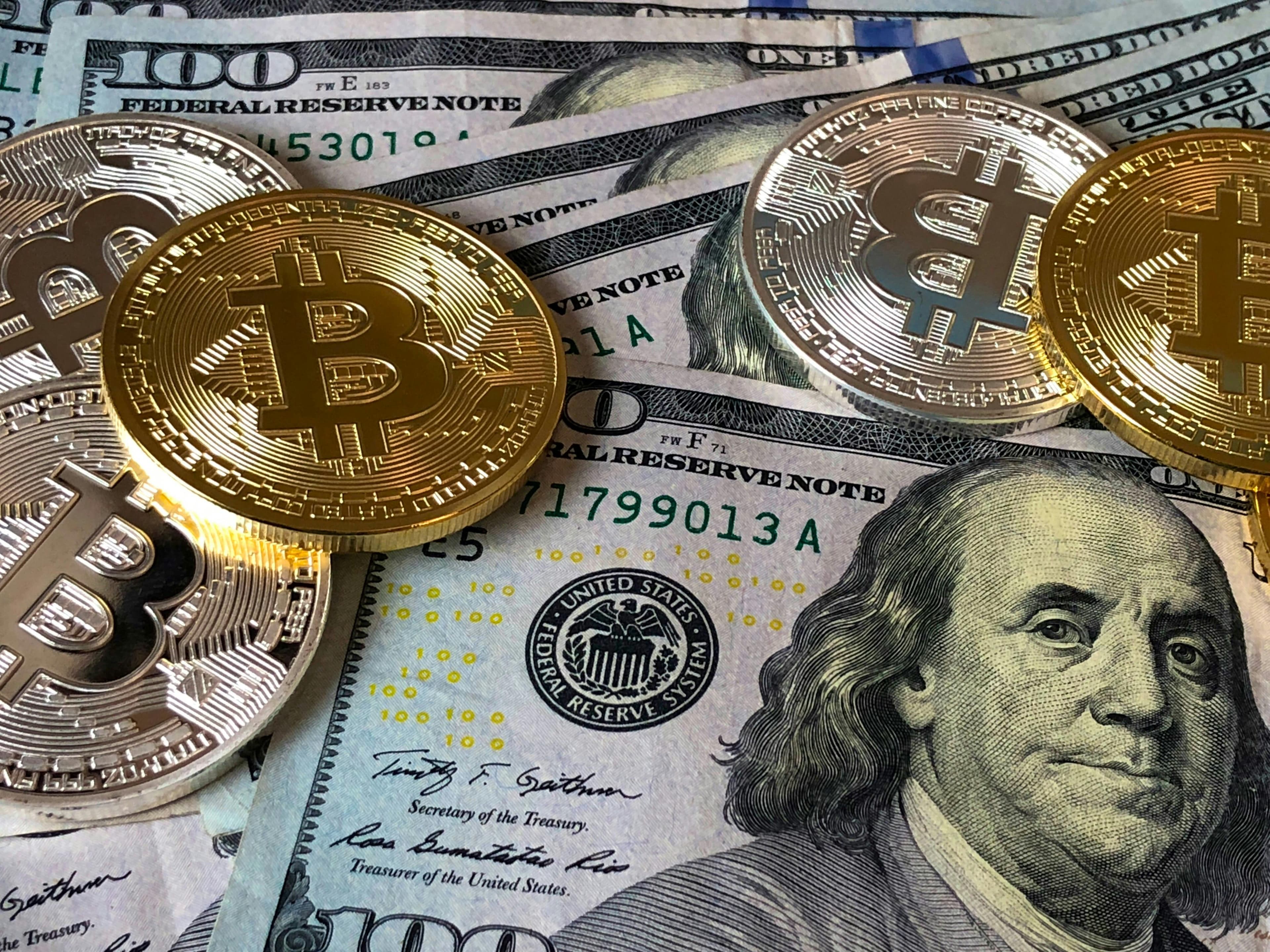
Should I Buy Bitcoin or Gold? Complete 2025 Comparison
Bitcoin or gold? Compare these inflation hedges head-to-head. Discover which asset suits your portfolio based on risk tolerance, time horizon, and investment goals.
In an era of unprecedented monetary expansion, geopolitical uncertainty, and rapid technological change, investors face a critical decision: should you allocate your wealth to Bitcoin, the revolutionary digital asset, or gold, humanity's 5,000-year-old store of value? This question has sparked countless debates among investors, economists, and financial advisors worldwide.
Both Bitcoin and gold serve similar purposes in investment portfolios—hedging against inflation, preserving wealth during economic turmoil, and providing diversification from traditional assets like stocks and bonds. Yet they achieve these goals through fundamentally different mechanisms and carry distinct risk-reward profiles. Understanding these differences is essential for making an informed decision that aligns with your financial goals, risk tolerance, and investment timeline.
Bitcoin vs Gold: At a Glance
Bitcoin (2025)
~$85,000
Market cap: ~$1.7T
Gold (per oz)
~$2,650
Market cap: ~$16T
Key Difference
Age vs Tech
5,000 years vs 16 years
Understanding the Fundamental Differences
Before diving into which asset might be right for you, it's crucial to understand what makes Bitcoin and gold fundamentally different—and surprisingly similar.
Gold: The Time-Tested Store of Value
Gold has served as money, jewelry, and a store of wealth for over 5,000 years. Its properties make it uniquely suited for this role:
- Scarce and difficult to produce: All the gold ever mined would fit in a cube roughly 72 feet on each side. Annual new supply adds only about 1.5-2% to total above-ground gold.
- Physically durable: Gold doesn't corrode, tarnish, or degrade over time. Gold coins from ancient Rome remain intact today.
- Universally recognized value: Every culture across history has valued gold, creating a global consensus around its worth.
- No counterparty risk: Physical gold ownership requires no intermediary, bank, or government to maintain its value.
- Central bank reserves: Governments worldwide hold over 35,000 tonnes of gold as monetary reserves, validating its role as money.
Bitcoin: Digital Gold for the Internet Age
Bitcoin, created in 2009, represents the first successful attempt to create scarce digital money without a central authority:
- Absolute scarcity: Only 21 million Bitcoin will ever exist, coded into the protocol. Currently about 19.6 million have been mined.
- Decentralized and borderless: No government, company, or individual controls Bitcoin. It operates across borders without permission.
- Easily transferable: Bitcoin can be sent anywhere in the world in minutes, versus days or weeks for physical gold.
- Divisible and verifiable: Bitcoin is divisible to eight decimal places and instantly verifiable through the blockchain.
- Transparent supply: Anyone can verify exactly how many Bitcoin exist at any moment and track all transactions on the public ledger.
Performance Comparison: Historical Returns
Looking at historical performance provides important context, though past results never guarantee future outcomes.
Gold's Long-Term Track Record
Gold has delivered steady, if unspectacular, long-term returns:
- Over the past 50 years (1975-2025), gold has averaged roughly 7-8% annual returns
- From 2000-2011, gold rose from $280 to $1,900 (nearly 600% gain)
- From 2011-2015, gold declined 45% to $1,050
- From 2015-2025, gold has risen from $1,050 to around $2,650 (152% gain)
- Gold typically outperforms during inflation, currency crises, and geopolitical stress
Bitcoin's Explosive but Volatile History
Bitcoin has delivered extraordinary returns with equally extraordinary volatility:
- From 2013-2025, Bitcoin has grown from around $100 to $85,000 (85,000% gain)
- Has experienced multiple 70-80% drawdowns during bear markets
- 2017 bull run: Rose from $1,000 to $20,000, then crashed to $3,200 (84% decline)
- 2020-2021 bull run: Rose from $7,000 to $69,000, then fell to $16,000 (77% decline)
- Demonstrates 4-year cycles correlating with Bitcoin halving events
Key insight: Bitcoin has dramatically outperformed gold over any multi-year period since its inception, but with vastly higher volatility. Gold provides stability; Bitcoin provides asymmetric upside with significant downside risk.
Risk Profiles: What Could Go Wrong?
Every investment carries risks. Understanding what could go wrong helps you make informed decisions.
Gold Risks
- Opportunity cost: Gold generates no income (no dividends or interest). During bull markets in stocks or real estate, gold opportunity cost can be significant.
- Storage and insurance costs: Physical gold requires secure storage, adding ongoing expenses that erode returns.
- Potential government confiscation: Historical precedent exists (U.S. Executive Order 6102 in 1933 required citizens to sell gold to the government).
- Limited upside: As a mature, $16 trillion market, gold is unlikely to 10x or 100x from current levels.
- Manipulation concerns: Paper gold markets (futures, ETFs) may not always reflect physical gold supply and demand.
Bitcoin Risks
- Technology risk: Though unlikely, quantum computing could theoretically break Bitcoin's cryptography, or undiscovered bugs could emerge.
- Regulatory crackdowns: Governments could impose harsh restrictions, though Bitcoin's decentralized nature makes total elimination difficult.
- Extreme volatility: 50-80% drawdowns are normal in Bitcoin's history. Many investors panic sell during these periods.
- Custody challenges: "Not your keys, not your coins" means self-custody responsibility. Lost private keys mean permanently lost Bitcoin.
- Competition: Other cryptocurrencies or superior technology could theoretically supplant Bitcoin (though network effects make this increasingly unlikely).
- Environmental concerns: Bitcoin mining's energy consumption faces criticism, potentially leading to social or regulatory pressure.
Use Cases: When Each Asset Shines
When to Choose Gold
Gold makes sense as the primary choice when:
- You're approaching or in retirement: Stability matters more than growth. Gold's lower volatility preserves capital during market stress.
- You need physical security: In extreme scenarios (war, currency collapse, grid failure), physical gold remains tradeable when digital systems fail.
- You're uncomfortable with technology: Gold requires no understanding of private keys, wallets, or blockchain technology.
- You prefer proven track record: 5,000 years of history provides confidence in gold's enduring value.
- You expect near-term crisis: During immediate crises, gold often responds faster as investors flee to the familiar.
When to Choose Bitcoin
Bitcoin makes sense as the primary choice when:
- You have a long time horizon: Young investors can weather Bitcoin's volatility and potentially benefit from massive upside.
- You want asymmetric returns: Bitcoin offers potential for 10x+ gains that gold's mature market can't match.
- You value portability and divisibility: Bitcoin can be transported across borders instantly with a 12-word seed phrase.
- You're concerned about confiscation: Bitcoin's decentralized nature and memorizable private keys make seizure extremely difficult.
- You expect digital monetary systems: If the future is increasingly digital, Bitcoin is positioned as the digital alternative to gold.
- You can handle volatility: If 50% drawdowns won't cause panic selling, Bitcoin's long-term trajectory has been extremely positive.
Portfolio Allocation: The Balanced Approach
Many sophisticated investors don't choose between Bitcoin and gold—they hold both. This balanced approach captures benefits of each while mitigating individual risks.
Sample Allocation Strategies
Conservative (Total alternative assets: 10-15% of portfolio):
- Gold: 8-12% of total portfolio
- Bitcoin: 2-3% of total portfolio
- Rationale: Primarily rely on gold's stability, with small Bitcoin allocation for upside optionality
Moderate (Total alternative assets: 15-25% of portfolio):
- Gold: 10-15% of total portfolio
- Bitcoin: 5-10% of total portfolio
- Rationale: Balanced exposure to both assets, reflecting both stability and growth potential
Aggressive (Total alternative assets: 25-40% of portfolio):
- Gold: 10-15% of total portfolio
- Bitcoin: 15-25% of total portfolio
- Rationale: Emphasize Bitcoin's asymmetric upside while maintaining gold allocation for stability
Important note: These are illustrative examples, not personalized advice. Your allocation should reflect your unique financial situation, goals, and risk tolerance.
Practical Implementation: How to Actually Buy Each
Buying Gold
Physical gold options:
- Gold coins (American Eagle, Canadian Maple Leaf, Krugerrand)
- Gold bars (from 1 gram to 400 ounces)
- Purchase from reputable dealers (APMEX, JM Bullion, local dealers)
- Store securely at home (safe) or in allocated storage facilities
Paper gold options:
- Gold ETFs (GLD, IAU) - trade like stocks, no physical delivery
- Gold mining stocks - leveraged exposure to gold prices
- Gold futures - for sophisticated traders
- Gold certificates - claims on gold held by institutions
Buying Bitcoin
Cryptocurrency exchanges:
- Coinbase, Kraken, Gemini (regulated U.S. exchanges)
- Create account, verify identity, link bank account
- Purchase Bitcoin with fiat currency
- Transfer to self-custody wallet for maximum security
Bitcoin ETFs (available since 2024):
- Bitcoin spot ETFs (IBIT, FBTC, BITB, etc.)
- Trade through traditional brokerage accounts
- No need to manage private keys or wallets
- Easier for retirement accounts (IRAs)
Self-custody options:
- Hardware wallets (Ledger, Trezor, Coldcard)
- Software wallets (for smaller amounts)
- Multisignature setups (for advanced users)
Why This Matters for Your Financial Future
The decision between Bitcoin and gold isn't just about choosing an investment—it's about protecting your wealth in an era of unprecedented monetary expansion and technological disruption. Here's why this choice matters more than ever:
- Inflation protection: With central banks maintaining loose monetary policy, hard assets like Bitcoin and gold provide hedges against currency debasement. Since 1971, when the U.S. left the gold standard, the dollar has lost over 85% of its purchasing power.
- Portfolio diversification: Bitcoin and gold have low correlation to stocks and bonds, improving portfolio resilience during market downturns. During the 2022 stock market decline, both gold and Bitcoin (over the full year) provided diversification benefits.
- Geopolitical insurance: Rising tensions, currency wars, and de-dollarization trends make assets outside the traditional financial system increasingly valuable. Both Bitcoin and gold serve this purpose, though through different mechanisms.
- Generational wealth transfer: Baby boomers hold the majority of gold, while millennials and Gen Z favor Bitcoin. This generational shift may drive long-term capital flows from gold to Bitcoin, though both can coexist.
- Technology meets tradition: The future likely includes both digital and physical stores of value. Positioning yourself with exposure to both captures this duality.
Whether you choose Bitcoin, gold, or a combination of both, you're taking a crucial step toward financial sovereignty—reducing dependence on government-issued currencies and traditional financial intermediaries. This decision can profoundly impact your wealth preservation and growth over the coming decades.
Making Your Decision: Key Questions to Ask
To determine whether Bitcoin, gold, or both belong in your portfolio, answer these questions honestly:
- What's my investment timeline? Less than 5 years favors gold; 10+ years favors Bitcoin; 5-10 years suggests both.
- How much volatility can I handle? If 50% drawdowns would cause panic selling, emphasize gold or avoid Bitcoin entirely.
- What's my age and financial situation? Younger investors with human capital ahead can take more Bitcoin risk; retirees should emphasize gold's stability.
- Do I want growth or stability? Growth seekers lean Bitcoin; stability seekers lean gold.
- Am I comfortable with technology? Bitcoin requires some technical understanding; gold does not.
- What scenarios am I protecting against? Hyperinflation, digital systems failure? Gold. Currency debasement, government overreach? Both. Long-term wealth growth? Bitcoin.
- Can I hold through downturns? Bitcoin and gold both experience significant drawdowns. Conviction and patience are essential.
Common Mistakes to Avoid
- All-or-nothing thinking: You don't have to choose just one. Many sophisticated investors hold both.
- Trying to time the market: Dollar-cost averaging into both assets over time typically outperforms timing attempts.
- Ignoring storage/custody: With gold, secure storage is essential. With Bitcoin, proper custody practices prevent loss.
- Overreacting to short-term volatility: Both assets are long-term holds. Short-term price swings shouldn't drive selling decisions.
- Neglecting to rebalance: If Bitcoin outperforms massively, it may become oversized in your portfolio. Periodic rebalancing maintains desired risk levels.
- Following hype cycles: When Bitcoin is making new highs and everyone's talking about it, that's often the worst time to buy aggressively. Conversely, bear markets offer better entry points.
- Forgetting about taxes: Both gold and Bitcoin have tax implications. Understand capital gains treatment in your jurisdiction.
Track Live Prices on SpotMarketCap
Whether you choose Bitcoin, gold, or both, tracking real-time prices is essential for informed decision-making. SpotMarketCap provides live pricing data for both assets, helping you monitor your investments and identify optimal entry points.
Related Topics on SpotMarketCap
Conclusion
So, should you buy Bitcoin or gold? The honest answer is: it depends on your unique circumstances, and you may want both.
Choose gold if you prioritize stability, have a shorter time horizon, are uncomfortable with high volatility, or value a 5,000-year proven track record. Gold is the conservative choice for wealth preservation.
Choose Bitcoin if you have a long time horizon, can withstand significant volatility, want asymmetric upside potential, and believe digital systems will increasingly dominate the future. Bitcoin is the aggressive choice for wealth growth.
Choose both if you want to balance stability with growth potential, diversify your alternative asset exposure, and protect against multiple possible futures. This is increasingly the approach of sophisticated investors who recognize that Bitcoin and gold solve different problems and may both play important roles in the decades ahead.
Whatever you decide, remember: Bitcoin and gold are marathon investments, not sprints. Buy with conviction, store securely, and maintain patience through inevitable volatility. The investors who succeed with both assets are those who think in years and decades, not days and weeks.
Disclaimer: This article is for educational and informational purposes only and should not be considered financial advice. We are not financial advisors. Bitcoin and gold investments carry significant risks, including the potential for substantial losses. Always consult with a qualified financial advisor before making investment decisions, and never invest more than you can afford to lose.
Track Real-Time Asset Prices
Get instant access to live cryptocurrency, stock, ETF, and commodity prices. All assets in one powerful dashboard.
Related Articles

Should I Invest in Silver or Gold? Complete Comparison Guide
Silver vs. gold investment decision: Compare volatility, returns, storage, and allocation strategies. Discover the optimal gold-silver ratio for your portfolio in 2025.
Should I Sell My Gold? Exit Strategy Decision Framework
Gold hitting new highs: Should you sell or hold? Learn systematic exit strategies, tax implications, portfolio rebalancing, and when to lock in profits vs. hold long-term.
Bitcoin vs Gold vs Real Estate: Which Is the Best Store of Value?
Compare Bitcoin, gold, and real estate as stores of value. Analyze returns, volatility, liquidity, and inflation hedge properties to build the ultimate wealth preservation strategy.