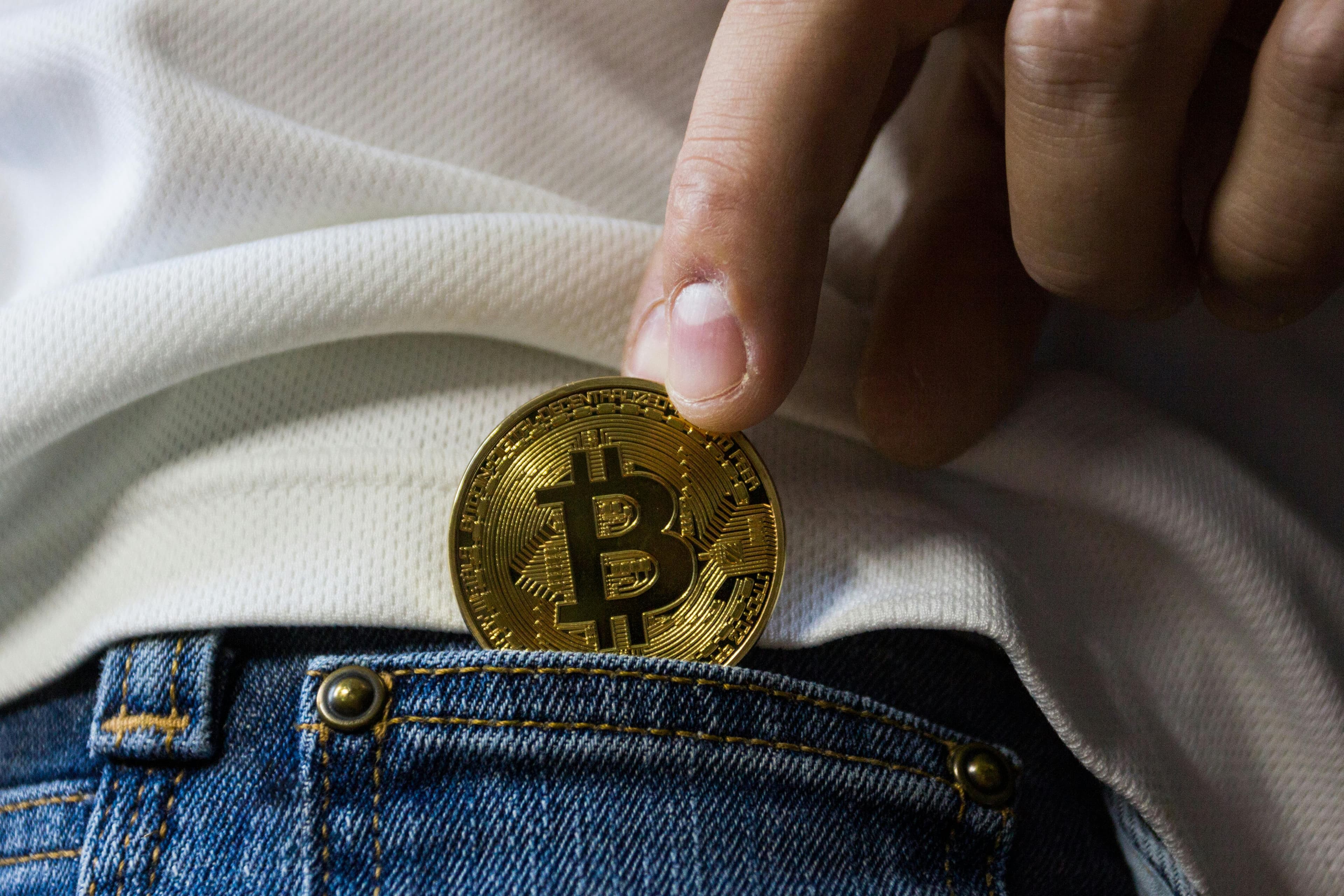
Zcash vs Bitcoin: Which is Better for Privacy and Store of Value?
In-depth analysis comparing Zcash and Bitcoin for privacy and store-of-value—cryptographic privacy vs transparency, network security, liquidity, regulatory risks, and optimal allocation strategies.
Zcash and Bitcoin represent fundamentally different approaches to cryptocurrency design—Bitcoin offers transparent, pseudonymous transactions with the world's strongest network security and $1+ trillion market capitalization, while Zcash provides optional cryptographic privacy through zero-knowledge proofs with a ~$1-2 billion market cap and focused privacy mission. As surveillance intensifies, financial privacy erodes, and blockchain analytics companies exploit Bitcoin's transparent ledger, the question of whether Zcash's superior privacy justifies its smaller network, lower liquidity, and uncertain regulatory future becomes critical for privacy-conscious investors and store-of-value seekers in 2025.
This comprehensive analysis examines Zcash versus Bitcoin through dual lenses: privacy properties (transaction confidentiality, metadata protection, regulatory risk) and store-of-value characteristics (scarcity, network security, liquidity, track record). Whether you're seeking financial privacy from surveillance, censorship resistance from authoritarian regimes, or simply effective wealth preservation outside traditional finance, understanding these cryptocurrencies' profound differences determines which better serves your needs.
Zcash vs Bitcoin Quick Comparison (2025)
Bitcoin Market Cap
~$1.2 Trillion
16 year track record
Zcash Market Cap
~$1-2 Billion
9 year track record
Privacy Level
ZEC >> BTC
Shielded vs transparent
Understanding the Privacy Spectrum
Bitcoin's Pseudonymity and Transparency
Bitcoin transactions are permanently recorded on a public blockchain visible to anyone with an internet connection. While users are identified by addresses (random alphanumeric strings like "1A1zP1eP5QGefi2DMPTfTL5SLmv7DivfNa") rather than real names, the entire transaction history—amounts, addresses, timestamps—is transparent. This creates a pseudonymous system where privacy depends on severing the link between addresses and real-world identities.
Bitcoin Privacy Weaknesses:
- Transaction Graph Analysis: Blockchain analytics firms (Chainalysis, Elliptic, CipherTrace) map address clusters to individuals, exchanges, and entities by analyzing transaction patterns, address reuse, and known exchange deposit addresses. Once one address is identified, entire transaction history is exposed.
- Exchange KYC Links: Centralized exchanges (Coinbase, Binance, Kraken) require identity verification. When you withdraw Bitcoin to personal address, that address is linked to your identity. All subsequent transactions from that address are traceable to you.
- Amount and Timing Metadata: Every Bitcoin transaction reveals exact amounts, timestamps, and transaction fees—metadata that can be correlated with real-world events to deanonymize users.
- IP Address Leakage: Broadcasting transactions without Tor or VPN reveals IP addresses that can be linked to identities and physical locations.
Bitcoin Privacy Improvements:
- CoinJoin: Collaborative transactions mixing multiple users' coins, breaking transaction graph analysis. Implementations include Wasabi Wallet, Samourai Whirlpool. Effective but requires technical knowledge and can flag addresses as "suspicious" to exchanges.
- Lightning Network: Off-chain payment channels that don't record every transaction on blockchain, improving privacy for small payments. Still experimental for privacy use-cases.
- Taproot/Schnorr: Recent Bitcoin upgrades improving privacy by making complex transactions indistinguishable from simple transfers. Marginal improvement, not fundamental privacy solution.
Reality: Bitcoin privacy requires constant vigilance, technical sophistication, and acceptance that one mistake (address reuse, exchange link, poor coin control) can expose entire transaction history. Not private by default.
Zcash's Cryptographic Privacy
Zcash offers optional fully shielded transactions using zero-knowledge proofs (specifically zk-SNARKs—Zero-Knowledge Succinct Non-Interactive Arguments of Knowledge). These cryptographic proofs allow transaction validity verification without revealing sender, recipient, or amount. When using Zcash's shielded addresses (z-addresses), transactions are completely confidential.
Zcash Privacy Strengths:
- Shielded Transactions Hide All Metadata: Sender address, recipient address, and transaction amount are encrypted. Blockchain shows a transaction occurred but reveals nothing about parties or values.
- Private by Default (If Used Correctly): Using z-to-z (shielded-to-shielded) transactions provides mathematically guaranteed privacy without user expertise required. No address reuse concerns or transaction graph vulnerabilities.
- Selective Disclosure: Users can prove transaction details to specific parties (auditors, regulators) via viewing keys without compromising public privacy. Compliance-friendly privacy.
- Resistance to Blockchain Analysis: No amount of computational power or AI can break zk-SNARK privacy (barring cryptographic breakthroughs). Chainalysis cannot analyze what isn't visible.
Zcash Privacy Weaknesses:
- Optional Privacy = Weaker Anonymity Set: Only ~5-10% of Zcash transactions use full shielding (z-to-z). Most users interact via transparent addresses (t-addresses) due to exchange requirements. Small shielded pool makes shielded transactions more suspicious and easier to correlate with exchanges.
- Transparent On-Ramps: Most exchanges only support transparent Zcash addresses due to regulatory concerns. Users must acquire ZEC transparently, then shield it—creating timing/amount correlations that partially compromise privacy.
- Computational Overhead: Shielded transactions require significant computation (generating zk-SNARKs), making mobile wallets and light clients challenging. Many users default to transparent transactions for convenience.
- Trusted Setup Concerns: Zcash's original zk-SNARK setup required "trusted ceremony" where cryptographic parameters were generated. If ceremony participants colluded and kept "toxic waste," they could theoretically create infinite shielded ZEC undetectably. While multiple ceremonies with many participants make this astronomically unlikely, theoretical risk exists. (Note: Zcash transitioned to Halo 2 proofs which eliminate trusted setup, though older shielded pool still uses original setup).
Privacy Comparison: Real-World Scenarios
Scenario 1: Protection from Corporate Surveillance
Use Case: Preventing employers, merchants, or business partners from analyzing your financial history via blockchain.
- Bitcoin: Transparent ledger allows anyone receiving payment from you to view your entire transaction history, balances, and counterparties unless you use CoinJoin (flagged by many exchanges) or maintain perfect address hygiene (difficult). Privacy requires constant technical effort.
- Zcash: Shielded transactions reveal nothing to recipients. Your financial history is completely hidden. Superior for this use case.
Winner: Zcash (if using shielded addresses)
Scenario 2: Protection from Government Surveillance
Use Case: Avoiding authoritarian government monitoring of financial activity, political donations, or capital flight.
- Bitcoin: Governments can subpoena exchanges for your identity, then track all on-chain activity. Blockchain analytics firms work with governments globally. Privacy possible with extreme operational security (no KYC acquisition, CoinJoin, Tor, coin control) but very difficult and creates "suspicious activity" flags.
- Zcash: Shielded transactions provide strong privacy even against state-level adversaries (barring cryptographic breakthroughs). However, acquiring Zcash privately is challenge (exchanges KYC; DEXs have low liquidity). Once acquired and shielded, very strong protection.
Winner: Zcash (with caveats about acquisition)
Scenario 3: Long-Term Wealth Preservation
Use Case: Storing significant wealth (6-7 figures) for 5-10+ years as inflation hedge and system-exit option.
- Bitcoin: $1.2T market cap, 16 year track record, globally liquid, institutional adoption, nation-state holdings (El Salvador). Drawdowns of 70-85% occurred but always recovered to new highs. Proven store of value despite transparency. Network security is unmatched ($50B+ annual mining security budget).
- Zcash: $1-2B market cap, 9 year track record, limited liquidity, no institutional adoption at scale, regulatory uncertainty (privacy coins face delisting risks). Has survived but hasn't demonstrated Bitcoin's resilience or appreciation. Privacy advantage doesn't compensate for much higher risk of value impairment.
Winner: Bitcoin (significantly)
Scenario 4: Cross-Border Capital Movement
Use Case: Moving $50,000+ across borders, avoiding capital controls or confiscatory taxation.
- Bitcoin: Highly liquid globally—can sell large amounts in any major city within hours. However, transparent transactions may trigger tax reporting, suspicious activity reports, or capital control enforcement at endpoints (exchanges).
- Zcash: Superior privacy during transfer (shielded transactions hide amounts and parties), but much harder to convert to fiat discreetly (fewer exchanges, lower liquidity, regulatory scrutiny on privacy coins). May require Bitcoin as intermediate step, undermining privacy.
Winner: Bitcoin (for practical liquidity); Zcash (for theoretical privacy, if endpoints cooperate)
Store of Value Comparison
Scarcity
- Bitcoin: Hard cap of 21 million BTC, enforced by global node network. Issuance declines via 4-year halvings; currently ~900 BTC/day (~0.85% annual inflation), declining to near-zero by 2140. Absolute scarcity proven over 16 years.
- Zcash: Hard cap of 21 million ZEC, same issuance schedule as Bitcoin. Currently ~3,600 ZEC/day (~6% annual inflation), halvings every 4 years. Scarcity identical to Bitcoin in design. However, trusted setup concerns raise theoretical (though extremely unlikely) infinite inflation risk for shielded pool.
Edge: Bitcoin (proven scarcity vs. theoretical concerns)
Network Security
- Bitcoin: Hashrate ~450-600 EH/s (exahashes per second), representing ~$50B+ of mining hardware and ~$15-20B annual electricity cost. Attacking Bitcoin (51% attack) would require outspending this massive security budget—economically irrational and technically infeasible.
- Zcash: Uses Equihash proof-of-work, much smaller miner network. Hashrate ~10-15 GH/s (much smaller scale). 51% attack is far more feasible than Bitcoin, though still expensive and detectable. Security adequate for current value but hasn't been tested at Bitcoin's scale.
Edge: Bitcoin (overwhelmingly stronger network security)
Liquidity and Market Depth
- Bitcoin: $50-100B daily trading volume, available on every major exchange, 24/7 global markets. Can trade $10M+ with minimal slippage. Derivatives markets (futures, options) provide hedging and leverage. Bitcoin ATMs, P2P platforms, and merchant acceptance widespread.
- Zcash: $50-200M daily volume (500x smaller than Bitcoin), limited exchange availability (some exchanges delisted privacy coins), minimal derivatives markets. Large trades ($100K+) face substantial slippage. Much harder to enter/exit positions.
Edge: Bitcoin (vastly superior liquidity)
Regulatory Risk
- Bitcoin: Increasingly accepted by regulators as commodity (CFTC) and acceptable investment (SEC approved spot ETFs). Some regulatory uncertainty remains (taxation, securities status of DeFi) but existential regulatory risk is low. Bitcoin is "too big to ban."
- Zcash: Privacy coins face heightened regulatory scrutiny. South Korea banned privacy coins (2021); several exchanges delisted ZEC, Monero, Dash due to regulatory pressure. Future regulations could further restrict availability, liquidity, and usability. Privacy = regulatory target.
Edge: Bitcoin (much lower regulatory risk)
Track Record and Lindy Effect
- Bitcoin: 16 years of operation, survived multiple 70-85% bear markets, regulatory attacks, hard forks, mining centralization concerns, exchange collapses—still exists and thrives. Lindy Effect suggests longevity.
- Zcash: 9 years of operation (launched October 2016), survived 2018 bear market (-95% from peak), development challenges, competition from Monero. Shorter track record and smaller scale mean less certainty about long-term survival.
Edge: Bitcoin (longer track record, greater survival certainty)
Why This Matters for Your Strategy
- Privacy vs. Store-of-Value Trade-off: Zcash offers superior privacy but weaker store-of-value properties (liquidity, network security, regulatory risk, track record). Bitcoin offers battle-tested store-of-value but weak default privacy. Choose based on which matters more.
- Allocation Sizing: If privacy is secondary to wealth preservation, Bitcoin should dominate crypto allocation (80-100%). If privacy is critical, Zcash can comprise 10-30% of crypto holdings as specialized tool, with Bitcoin as core.
- Regulatory Jurisdiction: In liberal democracies with rule of law, Bitcoin's transparency is acceptable trade-off for superior store-of-value properties. In authoritarian regimes or high capital-control environments, Zcash's privacy may be worth liquidity/risk trade-offs.
- Time Horizon: Long-term holders (10+ years) need Bitcoin's proven resilience. Short-to-medium term (2-5 years), Zcash could outperform if privacy becomes more valued, but higher risk.
- Use Case Determines Choice: Savings and wealth preservation favor Bitcoin. Transactions requiring privacy favor Zcash. Private wealth storage could use both (Bitcoin for bulk, Zcash for privacy-critical amounts).
Practical Implementation
Conservative Approach (Prioritize Store-of-Value)
- 90-100% Bitcoin
- 0-10% Zcash
- Rationale: Proven store-of-value more important than privacy; minimize regulatory and liquidity risks
Balanced Approach
- 70-80% Bitcoin (core holdings)
- 20-30% Zcash (privacy allocation)
- Rationale: Bitcoin core + meaningful Zcash for privacy optionality and potential regulatory arbitrage
Privacy-Focused Approach
- 50-60% Bitcoin
- 40-50% Zcash (perhaps split with Monero)
- Rationale: Prioritize privacy; accept lower liquidity and higher risk for censorship resistance and transaction confidentiality
Key Takeaways
- Bitcoin is pseudonymous, not private—transparent blockchain enables extensive surveillance via analytics firms; privacy requires technical expertise (CoinJoin, coin control, Tor)
- Zcash offers cryptographic privacy via zk-SNARKs—shielded transactions hide sender, recipient, and amount, providing superior privacy when used correctly
- Bitcoin vastly superior as store of value—$1.2T market cap vs. $1-2B, 16 year track record vs. 9 years, unmatched network security, global liquidity
- Zcash faces regulatory risks Bitcoin doesn't—privacy coin status attracts scrutiny, delistings, potential restrictions; "too private to regulate comfortably"
- Liquidity gap is enormous—Bitcoin $50B+ daily volume vs. Zcash $50-200M; exiting large Zcash positions is challenging
- Privacy-by-default adoption is low—only 5-10% of Zcash transactions fully shielded, weakening anonymity set; most users interact transparently due to exchange requirements
- Use case determines optimal choice—wealth preservation strongly favors Bitcoin; transaction privacy strongly favors Zcash; many benefit from holding both
- Regulatory jurisdiction matters—in authoritarian environments, Zcash's privacy may be worth trade-offs; in liberal democracies, Bitcoin's transparency is acceptable
- Bitcoin's transparency is feature for institutional adoption—audibility and compliance friendliness enable ETFs, corporate treasuries, nation-state reserves; Zcash's privacy blocks these
- Optimal strategy for most: Bitcoin-dominant with optional Zcash allocation—80-100% BTC for store-of-value, 0-20% ZEC for privacy optionality
Related Topics on SpotMarketCap
Conclusion
The choice between Zcash and Bitcoin for privacy and store-of-value represents a fundamental trade-off between competing priorities. Bitcoin has proven itself as a store of value over 16 years, surviving multiple existential threats, regulatory attacks, and 70-85% bear markets to emerge with trillion-dollar market capitalization, institutional adoption, and nation-state recognition. Its network security is unmatched, its liquidity is global, and its regulatory acceptance continues expanding. Bitcoin's Achilles' heel—transparent blockchain enabling pervasive surveillance—can be partially mitigated through technical measures (CoinJoin, Lightning Network) but requires constant vigilance and expertise.
Zcash offers what Bitcoin fundamentally cannot: mathematically-guaranteed cryptographic privacy shielding transactions from blockchain analytics, corporate surveillance, and state monitoring. For users in authoritarian regimes, privacy advocates, or those requiring confidential transactions, Zcash's zero-knowledge proof technology is genuinely revolutionary. Yet this privacy comes with significant costs: 500-1000x smaller market cap, much lower liquidity, heightened regulatory risk leading to exchange delistings, and shorter track record creating uncertainty about long-term survival. Zcash is a specialized tool, not a general-purpose store-of-value.
For most investors, Bitcoin should constitute the core cryptocurrency allocation (80-100%) due to its proven store-of-value properties, with Zcash serving as optional privacy-focused satellite position (0-20%) for users valuing transaction confidentiality or preparing for scenarios where privacy becomes more valuable. The extreme liquidity and regulatory risk differences make Zcash unsuitable as primary wealth preservation vehicle, while Bitcoin's transparency makes it inadequate for truly private transactions.
Your optimal allocation depends on personal factors: If you're in Western democracy with rule of law and prioritize wealth preservation, Bitcoin-dominant (90-100%) makes sense. If you face authoritarian surveillance, capital controls, or require transaction privacy for legitimate purposes, meaningful Zcash allocation (20-40%) may be justified despite risks. If you're privacy advocate accepting higher risk for ideological alignment, Zcash-heavy (40-50%) or even majority-Zcash positions could align with values.
Remember: Privacy and store-of-value represent different, sometimes conflicting, goals. Bitcoin maximizes store-of-value at expense of privacy; Zcash maximizes privacy at expense of liquidity, security, and proven resilience. Understanding which matters more to you—and accepting the trade-offs—is key to choosing wisely.
Track Real-Time Asset Prices
Get instant access to live cryptocurrency, stock, ETF, and commodity prices. All assets in one powerful dashboard.
Related Articles

What is Zcash? Privacy Cryptocurrency Explained
Complete guide to Zcash—privacy-focused cryptocurrency using zk-SNARKs for shielded transactions. Learn how zero-knowledge proofs work, privacy guarantees, limitations, and investment considerations.
Is Now a Good Time to Buy Bitcoin? Market Analysis 2025
Bitcoin down 25% from highs: Is now the time to buy? Analyze halving cycles, institutional behavior, and sentiment indicators for informed Bitcoin investment decisions.
Bitcoin vs Gold vs Real Estate: Which Is the Best Store of Value?
Compare Bitcoin, gold, and real estate as stores of value. Analyze returns, volatility, liquidity, and inflation hedge properties to build the ultimate wealth preservation strategy.